

Juggling two real estate transactions (buying and selling a house simultaneously) is one of the most stressful moves a Canadian homeowner can make, but with the right financing, the right timeline, and the right strategy, it doesn’t have to be.
This guide breaks down exactly how it works, including financing options, timelines, costs, and how to transition between homes smoothly without unnecessary stress.
At Equity Rich, we specialize in alternative lending solutions that bridge this exact gap, ensuring you don’t miss out on a property just because your current home hasn’t cleared the market yet.
How to Buy a House Before Selling Yours
According to WOWA, the Canadian housing market report for March 2026 is the following.
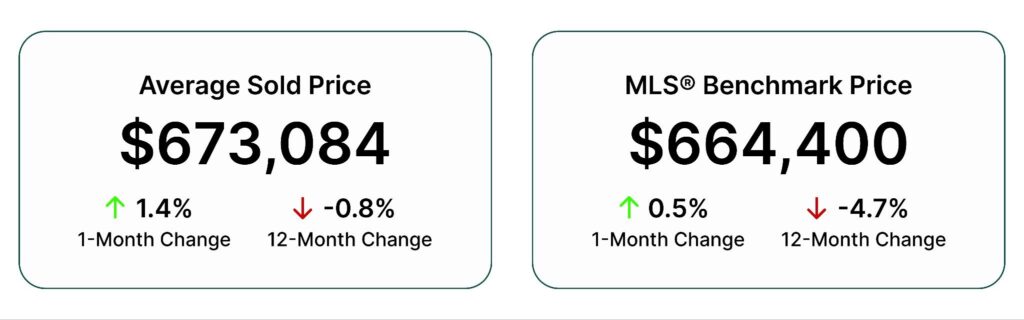
To buy a house before selling your current one, you essentially need to “unlock” the equity sitting in your existing walls.
Bridge Mortgage
What is a bridge loan, and how does it work? The short answer is that Bridge Financing is a short-term loan that uses the equity in your current home to fund the down payment on your new one before your old home’s sale closes.
Most Canadian homeowners who buy and sell simultaneously rely on bridge financing to cover the gap between closing dates. The logic is simple: you take possession of your new home before the cash from your current sale is available. However, in Canada, major lenders typically require a firm, unconditional sale agreement on your current property before they will approve the bridge loan. This short-term financing, usually lasting 30 to 120 days, allows you to use your existing equity for the new down payment, provided you have a guaranteed ‘exit date’ for your old home.
You should consider a bridge loan if:
- The closing date of your “New Home” is before the closing date of your “Old Home.”
- For your present house, you have a definite sale agreement.
All five of Canada’s big banks, TD, CIBC, Scotiabank, RBC, and BMO, offer bridge financing to their mortgage customers. But the approval criteria, rates, and maximum amounts vary widely. And if you don’t yet have a firm sale agreement on your current home, traditional lenders may turn you away, which is where alternative lenders in the Canadian market and private solutions become crucial.

Stay ahead in competitive markets with a bridge mortgage.
Home Equity Line of Credit (HELOC)
If you haven’t listed your home yet, you can open a HELOC to withdraw the down payment. Lenders usually won’t approve a HELOC once your home is officially on the market, so secure this before you list.
Think of it like this:
- You already have money “locked” in your current home (your equity)
- A HELOC lets you access that money before you actually sell
With a HELOC, you can borrow against a portion of that equity and use it for:
- Your down payment on the new home
- Closing costs
- Moving expenses
At Equity Rich, the focus is on equity-based lending, not traditional income-based approvals. We typically lend up to a 75-80% loan-to-value (LTV).
Check Your Eligibility in Seconds
The Step-by-Step Process: Navigating the Overlap
The transition between homes requires a tactical approach. Here is how the “simultaneous” process actually unfolds in 2026.
1. Understand Your Equity Position
Before anything else, know how much equity you’re working with. Subtract your remaining mortgage balance from your home’s current market value. This number is the foundation of your bridge financing amount. You can tap into this through a Home Equity Loan, a HELOC, or a bridge mortgage. If you’re unsure of your equity, read more about using equity in 2026.
2. Get Pre-Approved For Your New Mortgage
Apply for mortgage pre-approval on the new property before listing your current home. Lenders will assess whether you can carry both mortgages simultaneously. Self-employed? That’s a common challenge. Explore your options through Self-Employed Mortgages or a No-income Mortgage if traditional income documentation is an obstacle.
3. List Your Current Home
Once pre-approved, list your current property. In Toronto, homes are averaging 47 days on market as of March 2026, up from 36 days in March 2025. Plan for this timeline. The goal is to get a firm sale agreement, not just an accepted offer but a waived conditions agreement, because most traditional lenders require this before approving bridge financing.
4. Make An Offer On Your New Home
With a firm sale in hand (or a bridge strategy ready), you’re in a position to act fast in the market. Instead of restrictive bank bridge loans, many “equity-rich” homeowners now use professional alternative lenders who prioritize your home’s value over your income or credit score. By unlocking an LTV of up to 75-80%, you can access the cash needed to secure your next home before your current sale closes.
5. Arrange Your Bridge Financing
Once both agreements are signed, your lender or mortgage broker structures the bridge loan. You’ll need: your current home’s sale agreement, the purchase agreement on the new home, and a mortgage statement. The bridge loan covers the gap, typically your down payment amount minus your deposit, for the days between your two closing dates.
6. Close On Both Properties & Repay The Bridge
On the closing date, you move into your new house. When your old home closes, days or weeks later, the sale proceeds repay the bridge loan in full. No monthly payments required during the bridge period. The net equity from your sale flows directly to settle the short-term loan.
Timeline Example: The 60-Day Transition
To understand the financing gap between buying and selling a house, let’s look at a common scenario:
- Day 1: You find your “forever home” and want to move fast.
- Day 5: You secure a Private Mortgage or bridge loan to cover the deposit and down payment.
- Day 15: Your offer is accepted. You now own (technically) two homes.
- Day 45: You list your current home.
- Day 60: Your current home sells. The proceeds from this sale are used to pay off the bridge loan and any home equity strategies you employed.
Costs & Risks: What to Watch For
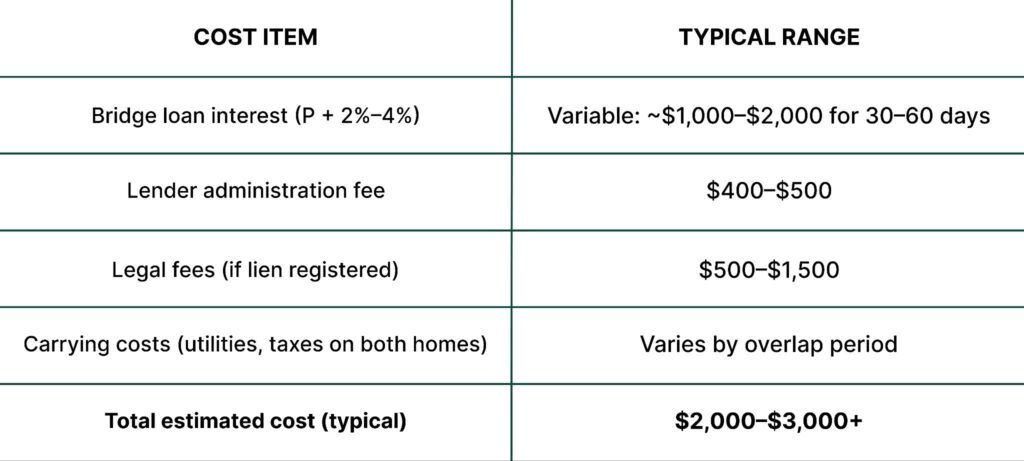
Buying and selling simultaneously isn’t without its “toll booths.” You should budget for:
Advantages
- No monthly payments during the bridge period
- Buy in a competitive market without waiting to sell
- Avoid rushed or below-market sale of current home
- Smooth overlap for moving, renovations, and possession
- Repaid automatically when your sale closes
Risks to manage
- Higher interest rate than a standard mortgage
- Carrying two properties if the sale is delayed
- Most banks require a firm sale agreement first
- Short maximum term (usually 90-120 days) at banks
- Risk of market price decline between agreements
Important risk: If your current home’s sale falls through or takes longer than expected, you could be carrying mortgage payments on two properties simultaneously. This is why having a professional assess your debt service ratios and knowing your exit options is essential before committing.
For homeowners with non-traditional income situations, older borrowers, or those who can’t qualify through a big bank, a private mortgage or Second Mortgage may offer a viable path.
Selling and buying a house at the same time doesn’t have to be a nightmare. At Equity Rich, we don’t believe in one-size-fits-all lending. We offer alternative, custom-built solutions based on your specific needs and the LTV of your property.

FAQs
1. Can I buy a house before selling my current one in Canada?
Yes, this is a common approach, especially in slower markets where you don’t want to miss a great property while waiting for your sale to close. The most common mechanism is a bridge mortgage, which lets you access your home equity to fund the new purchase before your sale settles. Traditional banks typically require a firm sale agreement first; if you don’t have one, Alternative Lenders or private lenders can fill the gap.
2. Can I get a mortgage if I’m retired or have no traditional income?
Yes. We offer both Retirement Mortgages and Reverse Mortgages.
3. What is the maximum LTV for a bridge or second mortgage?
At Equity Rich, we generally work within a 75-80% LTV. This ensures you keep a healthy cushion of equity while accessing the capital you need to move.
4. How do I transition between homes smoothly?
The key is liquidity. Whether it’s a home equity loan or a bridge loan, having the cash ready before you find the new house prevents panic selling.
5. Why choose an alternative lender over a big bank?
Traditional mortgage services in Canada are becoming increasingly rigid. Alternative lenders look at the “big picture”. If you have equity, you have options, regardless of your employment status or credit score.
Ready to Access Your Home Equity?
No credit check. No income verification. Funds in as little as 48 hours.
Get My Free Assessment