

In a fast-moving real estate market, timing can be the difference between securing the right property and missing the opportunity altogether. For homeowners who need to move quickly, a bridge mortgage can provide the short-term financing needed to close on a new home while waiting for the sale of an existing one. This can be especially valuable in competitive markets, where sellers may favour buyers who can act with confidence and fewer conditions.
For Canadians navigating overlapping purchase and sale dates, a bridge mortgage is often a practical solution. It offers flexibility, reduces pressure, and can make the transition from one property to another more manageable. When structured properly, it gives borrowers access to temporary home financing that helps them stay in control during a major life and financial decision.
What Is a Bridge Mortgage?
A Bridge Mortgage is a short-term loan designed to “bridge” the gap between buying a new home and receiving the proceeds from the sale of your current one. In simple terms, it helps cover the down payment or purchase funds needed when your new home closes before your current home sells.
Bridge Mortgages Help You:
- Access funds tied up in your current home’s equity
- Complete a bridge loan for home purchase without waiting for sale proceeds
- Manage closing dates that do not line up perfectly
- Reduce the risk of losing a property in a competitive market
- Handle financing before selling the home with more confidence
Ideal For:
- Homeowners who want to buy a new home before selling the old one
- Buyers upgrading or downsizing on a tight timeline
- People relocating for family, lifestyle, or work reasons
- Borrowers who need short-term flexibility before long-term financing settles
For many Canadians, a bridge mortgage is a practical way of using equity without rushing into a sale or compromising on the next property.
How a Bridge Mortgage Works
A bridge mortgage is built around the expected proceeds from the sale of your current home. The lender advances short-term funds so you can complete the purchase of your new home, and then the loan is repaid once your existing property sells.
Step-by-Step Guide
- You buy a new property.
You find a home you want to purchase, but your current home has not yet closed. - Your existing home is listed or sold conditionally.
In many cases, lenders prefer that your current home already has a firm sale agreement in place. - The lender reviews the numbers.
They assess the equity in your current property, your new mortgage arrangement, and your ability to carry both obligations temporarily. - You receive short-term funding.
The bridge mortgage covers the gap between the funds you need now and the funds you will receive from your home sale. - Your current home closes.
Once the sale is completed, the proceeds are used to repay the bridge financing.
This is why many borrowers looking into bridge mortgage requirements should prepare their sale and purchase documents early. The process moves more smoothly when timelines, equity position, and affordability are clear from the start.
Why Bridge Mortgages Matter in Competitive Markets
In a balanced market, buyers may have more time to coordinate a sale and purchase. In a competitive one, that flexibility often disappears. Sellers may favour cleaner offers, faster closings, and buyers who appear ready to proceed without hesitation.
A bridge mortgage helps solve that problem. Instead of waiting for one transaction to complete before moving on to the next, borrowers can move decisively when the right property becomes available. That matters in markets where demand is high, inventory is limited, and homes may sell quickly.
It also fits into broader trends that are reshaping the mortgage market in 2026, where flexibility and alternative funding structures are becoming increasingly relevant. As more borrowers explore solutions outside traditional lending timelines, bridge financing stands out as a useful tool, especially when paired with the right advice and affordability review.
For borrowers comparing solutions from alternative lenders in the Canadian market, the key benefit is custom structuring. Equity Rich offers an alternative, custom-built solution based on the borrower’s needs and affordability, which can be especially helpful when a standard approach does not fit the realities of the transaction.
Benefits of a Bridge Mortgage
A bridge mortgage can do more than simply cover a timing gap. It can also make the entire transaction less stressful and more strategic.
1. It Lets You Act Quickly
When you find the right home, you may not have the luxury of waiting for your current property to sell. A bridge mortgage allows you to move forward without delay.
2. It Reduces Pressure to Sell Too Fast
Without short-term financing, some homeowners feel forced to accept lower offers or rush the sale process. Bridge financing can create breathing room and support better decision-making.
3. It Helps Preserve Your Buying Position
If you need to buy a new home before selling the old one, being able to close on time can strengthen your overall position in negotiations.
4. It Uses Existing Equity Efficiently
For homeowners with meaningful equity, a bridge mortgage can be one of several smart home equity strategies. Rather than leaving that value inaccessible until closing, borrowers can use it to make a smoother transition.
5. It Supports Complex Borrower Profiles
Borrowers with non-traditional income may still need financing solutions that match real-life timelines. In some cases, this becomes relevant for those exploring a Mortgage for Self-Employment or reviewing alternatives where income documentation does not fit a conventional lending model.
When Should You Use a Bridge Mortgage?
A bridge mortgage can be useful in several specific situations:
- Your purchase closes before your sale
- You have found a property you do not want to lose
- You need flexibility during a move or relocation
- Your funds are tied up in home equity until closing
- You want a short-term solution rather than restructuring your full mortgage immediately
It may also make sense when you are considering other forms of short-term borrowing, such as Home Equity Loans, but need something specifically tied to a real estate closing timeline.
That said, bridge financing is most useful when the exit strategy is clear. In most cases, that means your current home is already sold or likely to sell within the bridge term.
Bridge Mortgage vs. Other Options
Not every borrower should use a bridge mortgage. The right choice depends on timing, equity, income, and how certain your home sale is.
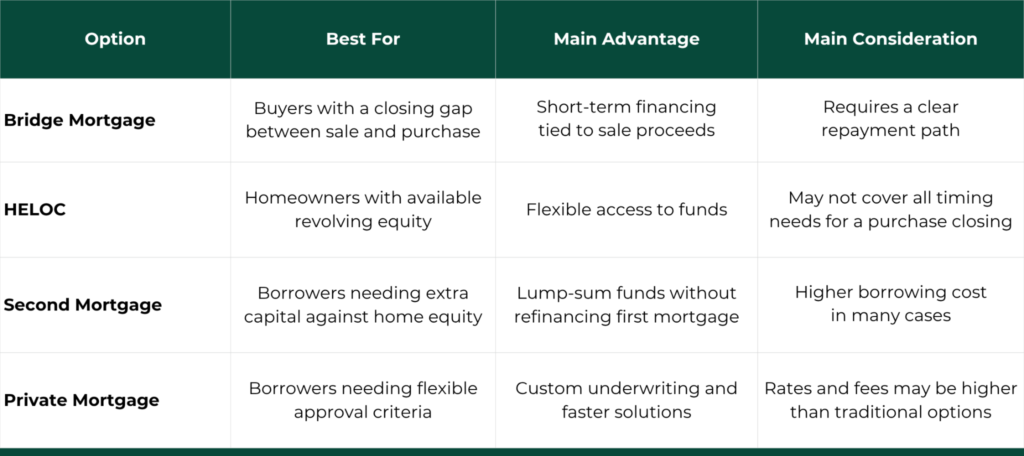
For some Canadians, a Second Mortgage or HELOC may be enough. Others may need a more tailored Private Mortgage solution when timing, income, or property details fall outside standard lender guidelines.
How to Qualify for a Bridge Mortgage
Qualifying for bridge financing depends on the lender, but the most important factors are usually straightforward.
Common Qualification Factors
- A signed purchase agreement for the new home
- A firm or near-firm sale agreement for the existing home
- Sufficient equity in the current property
- Proof that you can manage carrying costs during the overlap period
- Clear documentation for both transactions
Because approval depends heavily on timing and equity, borrowers should understand the practical side of bridge mortgage requirements before making firm commitments.
Lenders may also look more closely at your income profile. If your earnings are irregular, seasonal, or business-based, the assessment may differ from a conventional file. This is where borrowers already exploring a No-income Mortgage or trying to get a mortgage with no income may benefit from discussing alternative structures early. The right lending solution should still reflect affordability, not just asset value.
Making the Move with the Right Financing
A bridge mortgage can be a smart solution for Canadians navigating fast-moving real estate decisions. When the timing of your sale and purchase does not align, it offers a practical way to manage the gap without losing momentum. From covering financing before selling the home to helping you compete more confidently for your next property, bridge financing can play an important role in a well-structured move.
The key is choosing a solution that reflects both your timing and your financial reality. Whether you are reviewing broader home equity loans, comparing flexible funding options, or simply looking for dependable mortgage services in Canada, the right approach should be built around your needs and affordability.
At Equity Rich, that means offering alternative, custom-built solutions designed around the borrower, not a one-size-fits-all formula.
Frequently Asked Questions
- What is a bridge mortgage in Canada?
A bridge mortgage in Canada is short-term financing used to connect the purchase of a new home with the sale of an existing one. It is commonly used when homeowners need access to their equity before their current sale closes.
- How does a bridge mortgage work?
It works by advancing short-term funds based on the equity in your current home, allowing you to buy your next property before the proceeds from your existing home sale are available.
- How do bridge loans work for buying a house?
A bridge loan gives you temporary funds so your purchase can close first. Once your current property sells, the proceeds are used to pay off the bridge balance. That is why a bridge loan for home purchase is typically used when the sale and purchase dates do not align.
- Can I buy a house before selling mine?
Yes, in many cases you can. A bridge mortgage is one of the most common ways to buy a new home before selling the old one, provided you have sufficient equity and a realistic repayment plan.
- Is a bridge mortgage worth it?
It can be, especially if it helps you secure the right property, avoid rushed decisions, and manage a tight timeline. The value depends on the cost, the strength of your sales plan, and how important timing is in your transaction.
- When should I use a bridge loan?
You should consider one when your purchase closes before your sale, and you need temporary home financing to complete the transaction smoothly.
- What happens if my home doesn’t sell before closing?
That depends on the lender and the structure of your financing. In some cases, you may need an extension, a different short-term solution, or a move into another form of borrowing, such as a private or equity-based loan. This is why having a backup plan matters.
Ready to Access Your Home Equity?
No credit check. No income verification. Funds in as little as 48 hours.
Get My Free Assessment